(1) Depression amid COVID-19
Highlights
- The study aims to predict depression and anxiety amid COVID-19, known as “Corona Blues,” and contribute to the activation of spatial and temporal analysis in domestic depression research.
- The study lays the groundwork for applying spatial analysis methods to depression research by analyzing spatiotemporal population movements. The analysis of big data from media and SNS expands the methodology of domestic depression research.
- The study provides appropriate social distancing guidelines for both COVID-19 prevention and Corona Blue relief through a qualitative analysis of spatiotemporal population movements in the prolonged pandemic situation.
- The study utilizes various variables, such as media and SNS big data, population movements, social, economic, and environmental factors, to predict spatiotemporal patterns of Corona Blue and provide diverse perspectives on the spatial epidemiological factors of the disease.
- The visualization of the disease prediction model contributes to effective policy-making for proactive prevention and management of Corona Blue and prepares for the post-COVID-19 era.

Figure Overall frame work of the study about depression and anxiety amid COVID-19, known as “Corona Blues,”
(2) Preterm birth in urban cities
Highlights (1)
- The study aimed to assess the association between air pollution and ovarian reserve in young, infertile women.
- The results of the study showed that an increase in particulate matter (PM10) concentration was associated with a decrease in the Anti-Müllerian hormone (AMH) ratio, which is an indicator of ovarian reserve.
Highlights (2)
- This study examines the relationship between nighttime environmental noise and semen quality in men who visited a fertility center in Seoul. The study found that higher nighttime noise levels were associated with an increased risk of oligozoospermia (low sperm count) and a decreased risk of severe teratozoospermia (abnormal sperm morphology) in men.
- The study highlights the potential health impacts of environmental noise and provides evidence for the need to further investigate the relationship between noise pollution and male fertility.
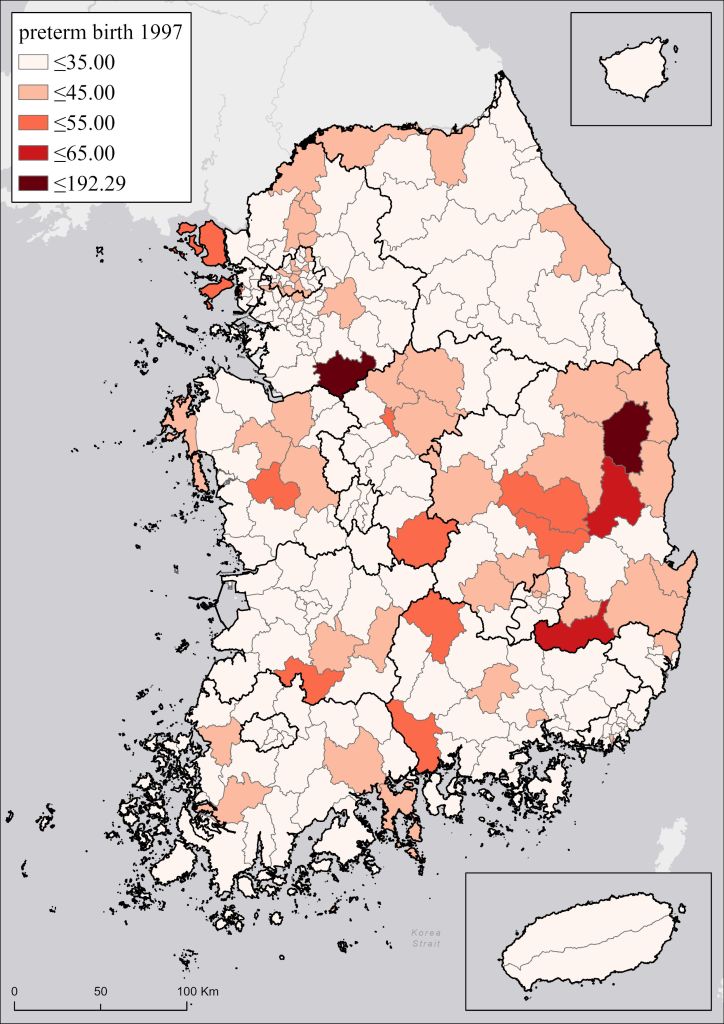
Figure Changes in preterm birth rate of 1997

Figure Spatial distribution of noise monitoring center and patient’s location
 Changmin Im - Urban Geographer